



IMDEA Nanociencia advances towards the industrial production of a nanotherapy for Duchenne muscular dystrophy
09.04.2026
 |
|
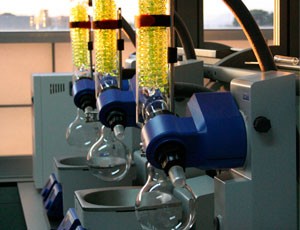
Credit: Synthelia |
- The NanoDMD project, led by Professor Álvaro Somoza, will develop a scalable manufacturing process for gold nanoparticles functionalized with aptamers for the selective delivery of therapeutic nucleic acids to muscle stem cells.
- The project, funded by the Spanish Ministry of Science, Innovation and Universities, aims to bring an innovative treatment for a currently incurable disease closer to the clinic.
| Tweet |  |
Press release download |
Madrid, 9th April, 2026. Researchers at IMDEA Nanociencia, together with the company Synthelia Organics, are working on the industrial production of a nanoparticle-based therapy for Duchenne muscular dystrophy. The Nanobiotechnology Group at IMDEA Nanociencia, led by Professor Álvaro Somoza, has secured funding in the 2025 Proof of Concept Projects Call of the Spanish Ministry of Science, Innovation and Universities for the project NanoDMD —Towards GMP production of nanomedicines for the treatment of Duchenne muscular dystrophy. This grant represents a decisive step toward transferring to the pharmaceutical industry a pioneering nanotherapy developed in Madrid against Duchenne muscular dystrophy (DMD), a severe and progressive genetic disease that currently lacks an effective cure.
A devastating disease with no cure
Duchenne muscular dystrophy is an X-linked genetic disorder caused by mutations in the dystrophin gene. It mainly affects boys and leads to progressive muscle degeneration, resulting in loss of ambulation, respiratory and cardiac failure, and premature death. Current treatments, such as corticosteroids or exon-skipping therapies, offer limited efficacy, do not halt disease progression, and often involve significant side effects. Therefore, new, safer, and more effective therapeutic strategies are urgently needed.
Gold nanoparticles to regenerate muscle
The main objective of the NanoDMD project is to bridge the gap between laboratory results and industrial production, and over the next 24 months the team will focus on four strategic lines: 1) developing a scalable manufacturing process based on continuous flow synthesis to ensure greater reproducibility and quality control; 2) implementing a quality system for the synthesis and validation of therapeutic nucleic acids, paving the way for future certification; 3) conducting preclinical evaluation of the efficacy and toxicity of the scaled-up nanoformulation, both in vitro and in vivo; and 4) preparing all necessary documentation for technology transfer and the regulatory roadmap toward future clinical trials.
The therapy is currently in the development phase and has not been tested in humans, nor is it expected to be tested throughout the project. However, the project results are promising. The development of a highly selective therapy, such as that proposed by NanoDMD, could reduce the amount of drug needed per dose, lower long-term manufacturing costs, and improve cost-effectiveness for healthcare systems. In addition, the technology platform developed in this project is adaptable to other diseases with unmet medical needs, by simply changing the therapeutic nucleic acid and the cellular target.
From the laboratory to the pharmaceutical industry
To ensure successful technology transfer, IMDEA Nanociencia is collaborating with Synthelia Organics S.L., a Spanish company specialized in industrial-scale chemical synthesis and process transfer for the pharmaceutical sector, with prior experience in the production of gold nanoparticles.
The project aims to generate a complete technology transfer package demonstrating that the nanoformulation is not only effective in the laboratory, but also industrially scalable and ready to advance toward the regulatory phases preceding human clinical trials. To this end, the necessary steps will be implemented to comply with Good Manufacturing Practices (GMP) and Good Laboratory Practices (GLP).
The research team
The project is led by Prof. Álvaro Somoza at IMDEA Nanociencia and includes the collaboration of Daniela Palacios, researcher at the Italian National Research Council (CNR, Rome), a molecular biologist specialized in skeletal muscle regeneration, DMD animal models, and therapeutic validation.
Prof. Somoza’s team has been working on this line of research for several years. Within the framework of the national NANORARE project (PID2020-119352RB-I00), funded by the Spanish Ministry of Science, Innovation and Universities, the group developed and preclinically validated a formulation based on gold nanoparticles conjugated with aptamers capable of selectively delivering therapeutic oligonucleotides—specifically microRNA-206—to muscle stem cells. The results, published in 2025 in Nature Communications, demonstrated that in animal models of muscular dystrophy this strategy promoted the formation of new muscle fibers and restored functional muscle strength, with virtually negligible toxicity and highly selective biodistribution. The developed aptamer is protected by a patent, reinforcing the strategic value and commercialization potential of the technology.
In addition, Prof. Somoza has direct experience in the clinical translation of nanomedicines. As coordinator of the European project NoCanTher under Horizon 2020, he led the development and GMP-compliant scale-up of a nanotherapy for pancreatic cancer that was tested in eight patients following approval by the Spanish Agency of Medicines and Medical Devices (AEMPS). The initial continuous-flow scale-up of gold nanoparticles was also explored in a regional Industrial Doctorate project with Synthelia Organics.
Through initiatives such as NanoDMD, IMDEA Nanociencia further strengthens its role as an internationally recognized multidisciplinary research center, with a strategic program specifically devoted to the development of nanotechnology for healthcare and to the effective transfer of innovative solutions from the laboratory to society.
Contact:
Prof. Álvaro Somoza. Nucleic acids and nanoparticles in nanomedicine.
IMDEA Nanociencia Dissemination and Communication Office
This email address is being protected from spambots. You need JavaScript enabled to view it.


Source: IMDEA Nanociencia.
The IMDEA Nanociencia Institute is an interdisciplinary research center in Madrid dedicated to exploring nanoscience and developing nanotechnology applications for innovative industries. IMDEA Nanociencia has been a Severo Ochoa Center of Excellence since 2017, the highest national recognition of research excellence.